Capture when and how the symptom appears.
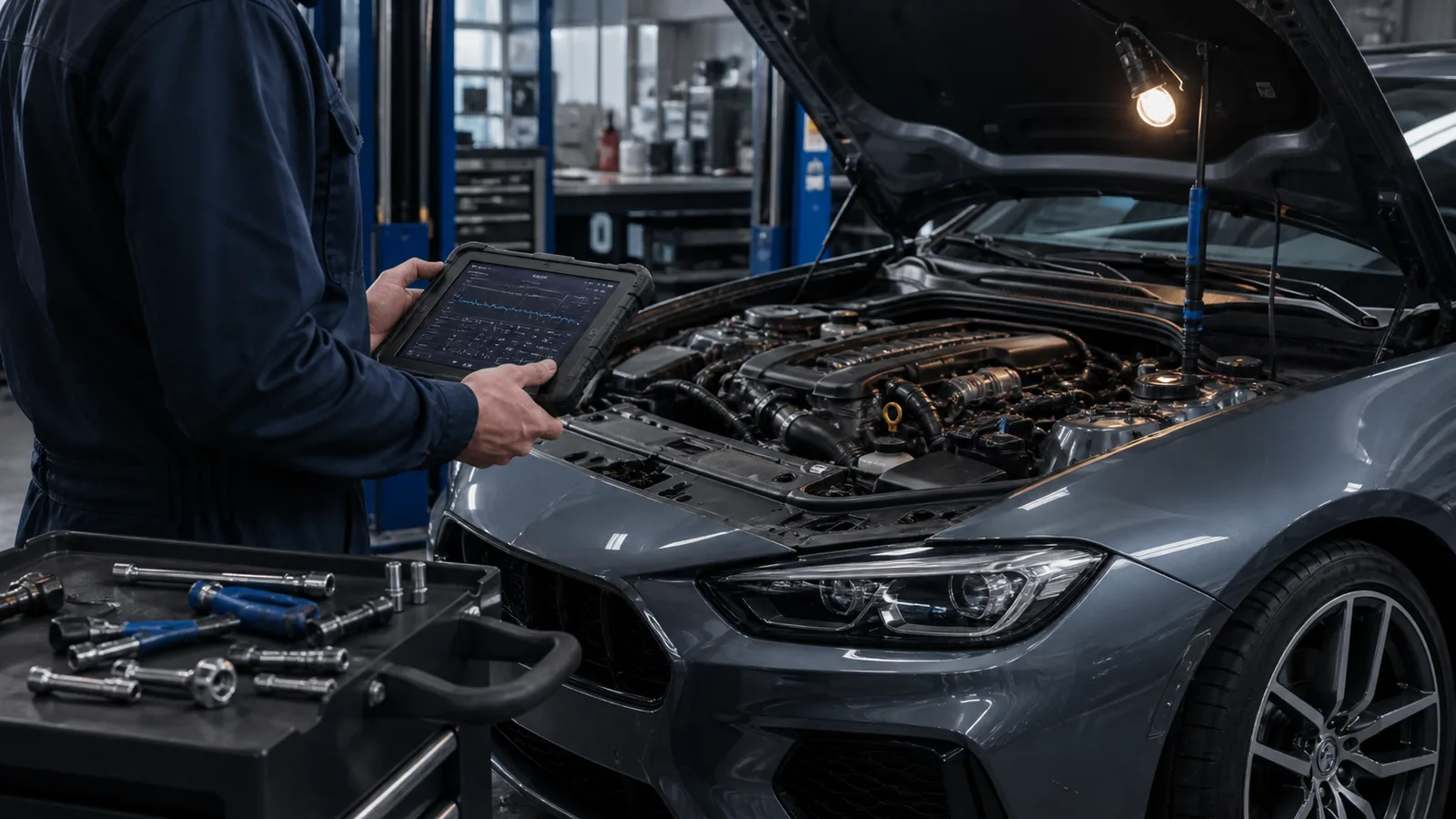
DIAGNOSTICS / OBD2
Diagnose the system—not the parts catalog.
Warning lights, scan data and repeatable checks that help you choose the next useful test.
Start here ↓THE USEFUL VERSION
Good diagnosis reduces uncertainty one test at a time. A code, noise or warning light defines the area to investigate; it does not automatically identify the part to replace.
Use specifications and related live data.
Repeat the test after the repair.
EDITOR’S STARTING POINTS
Read this first.
TAKE IT WITH YOU
A four-step field check.
Save this sequence before you inspect, diagnose or buy.
- 01Record every warning and operating condition
- 02Read codes and freeze-frame data before clearing
- 03Check battery voltage, fluids and visible connections
- 04Confirm the suspected cause with a focused test
COMMON QUESTIONS
Clear answers, no filler.
Does a code name the failed part?
Usually no. It identifies a detected circuit or system condition that may have several causes.
Can I keep driving with the light on?
A flashing check-engine light or oil-pressure, temperature and brake warning can require an immediate safe stop.
Should I erase codes before inspection?
No. Clearing removes freeze-frame clues and resets emissions readiness monitors.

AUTOMOTIVE COMPASS
Use one guide. Make one better decision.
Every section connects vehicle data, physical condition and real ownership—not isolated search keywords.
Open the inspection checklist →