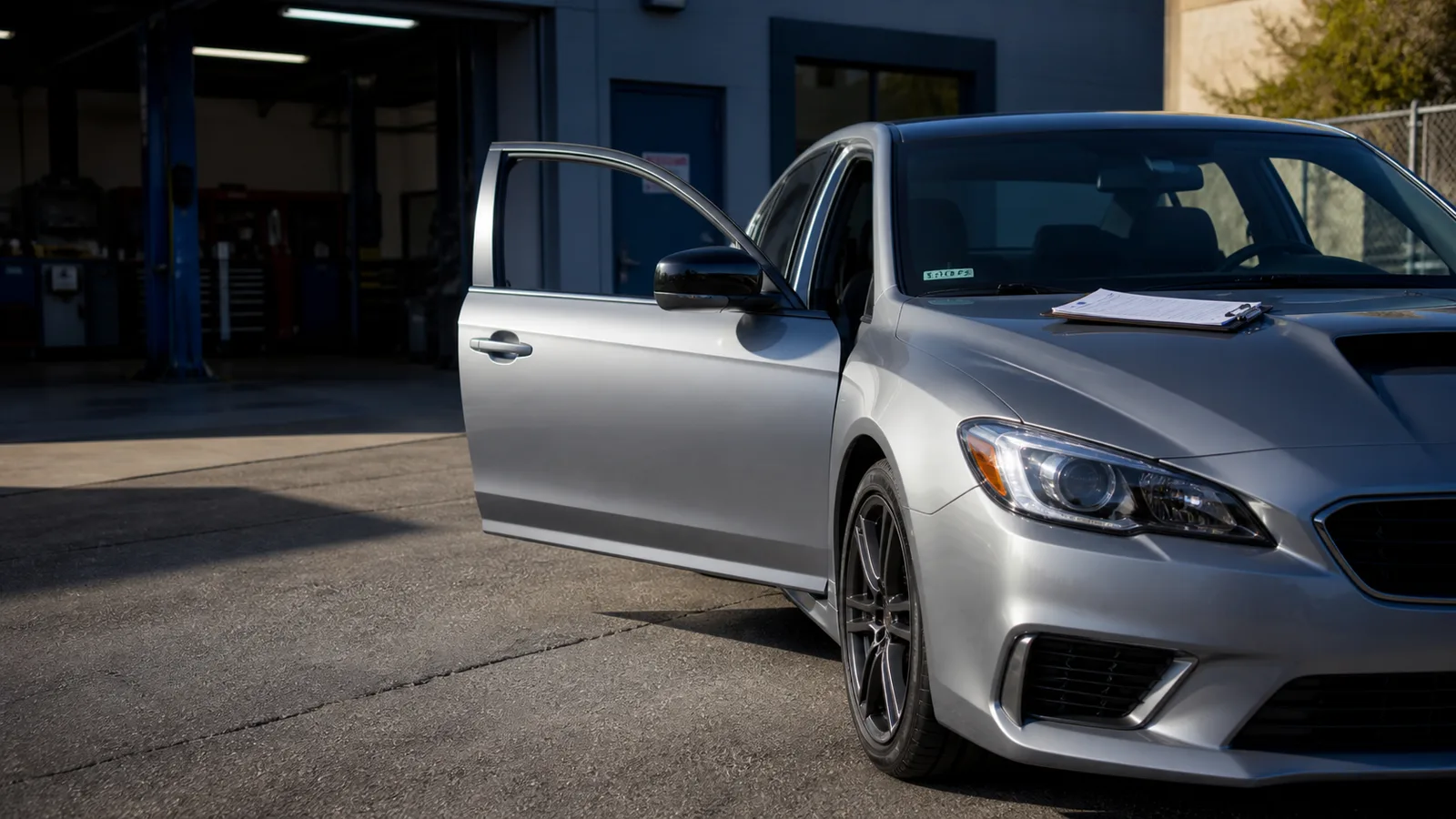
A clean history report is useful, but it cannot tell you how the car behaves today. Inspect in daylight, start with a cold engine, and ask the seller not to warm the vehicle before you arrive.
Before you meet the seller
Confirm the VIN, mileage, title status, service history and whether the seller has the title in their name. Compare the asking price with several local listings.
- Run the VIN through the NHTSA recall lookup
- Ask for service invoices, not only a stamped booklet
- Bring a flashlight, paper towel, tire gauge and OBD2 scanner
Body, glass and tires
Walk around twice: first from a few yards away to see stance and panel alignment, then close enough to inspect paint edges and fasteners.
- Look for mismatched paint texture and overspray
- Check all four tire date codes and tread width
- Inspect glass chips, lamp moisture and uneven gaps
Cold start and road test
The engine should start promptly without heavy smoke, loud knocking or warning lights that remain on. Use light and firm braking, make slow full-lock turns and test every gear.
- Watch coolant temperature and charging voltage
- Listen over bumps with the audio off
- Verify straight tracking and consistent shifts
When to pay for a PPI
An independent pre-purchase inspection is especially valuable for modified, luxury, performance, flood-region and out-of-warranty vehicles. A seller who refuses one is giving you useful decision-making information.
Sources and useful tools
NHTSA recall tools ↗FTC used-car guide ↗Specifications and procedures vary. Follow the owner’s manual and use a qualified technician whenever safety or diagnosis is uncertain.