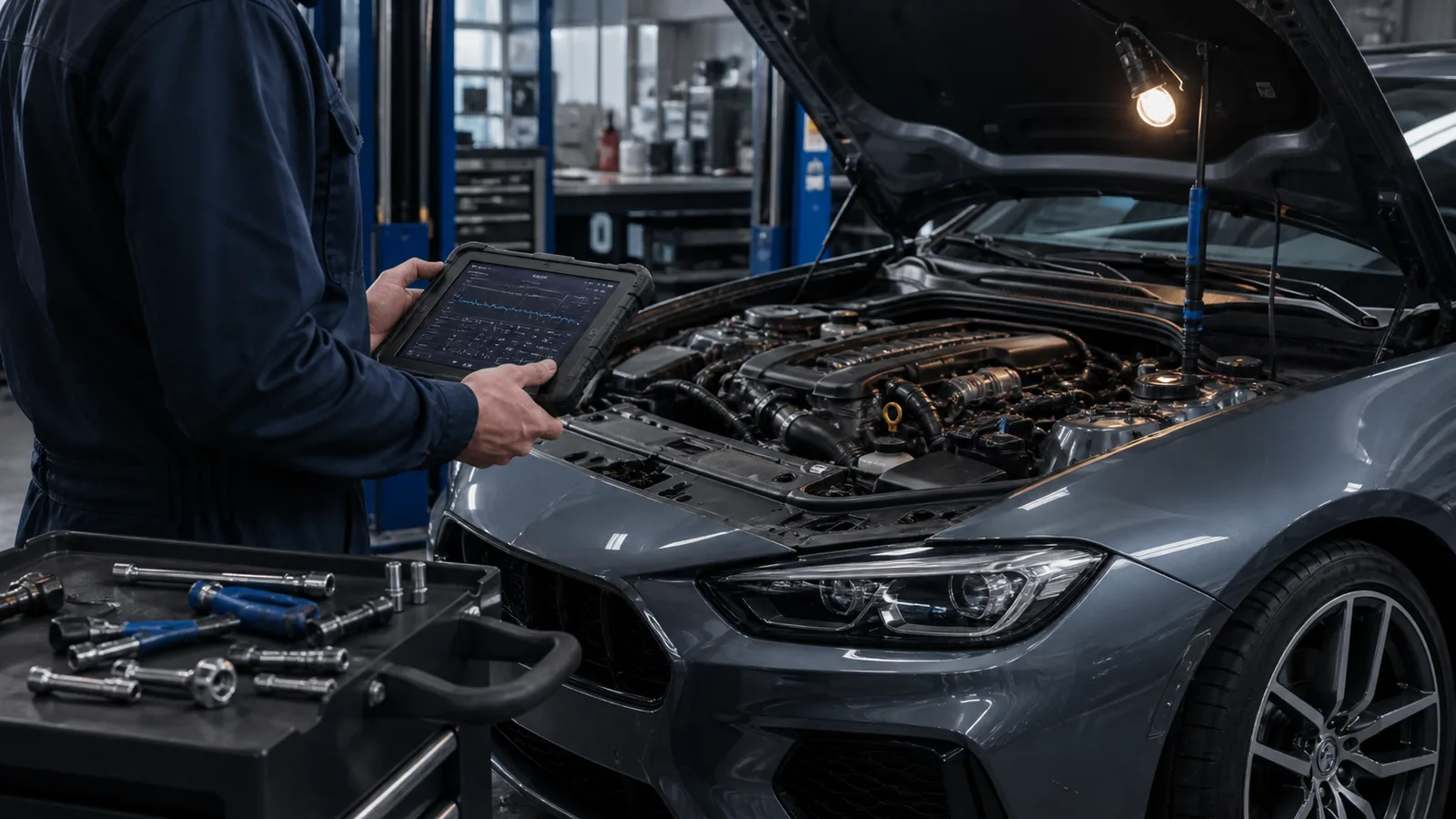
“It will not start” describes several different failures. The starter may not turn the engine, it may turn too slowly, or the engine may crank normally without running. Naming the symptom correctly prevents wasted parts and unsafe roadside experiments.
Identify what the car actually does
Turn unnecessary loads off, apply the parking brake and observe one controlled start attempt. Note whether the starter is silent, clicks, turns slowly or cranks at normal speed. Record warning messages and whether interior lights dim sharply.
No crank or one click
Check that the transmission is fully in Park or Neutral, or that the clutch is depressed as required. A weak battery, poor terminal connection, starter-control fault, immobilizer issue or failed starter can produce similar symptoms.
- Try the spare key when an immobilizer warning appears
- Inspect accessible battery connections for looseness or corrosion
- Do not bypass safety interlocks or short starter terminals
Slow cranking
Slow, uneven cranking often points toward low battery charge, excessive cable resistance, a failing starter or mechanical drag. Measure voltage and perform an appropriate battery and voltage-drop test rather than relying on headlamp brightness.
Normal cranking but no start
A cranking engine still needs correct fuel delivery, ignition, compression and control-module permission. Check for relevant warning lights and fault data, but avoid repeatedly cranking or adding fuel and starting fluid without a model-specific procedure.
When to stop troubleshooting
Stop when you smell strong fuel, see smoke, find damaged high-current wiring, hear mechanical impact or face traffic or weather risk. Hybrid and EV high-voltage systems require vehicle-specific training and isolation procedures.
Sources and useful tools
NHTSA roadside emergency guidance ↗Specifications and procedures vary. Follow the owner’s manual and use a qualified technician whenever safety or diagnosis is uncertain.