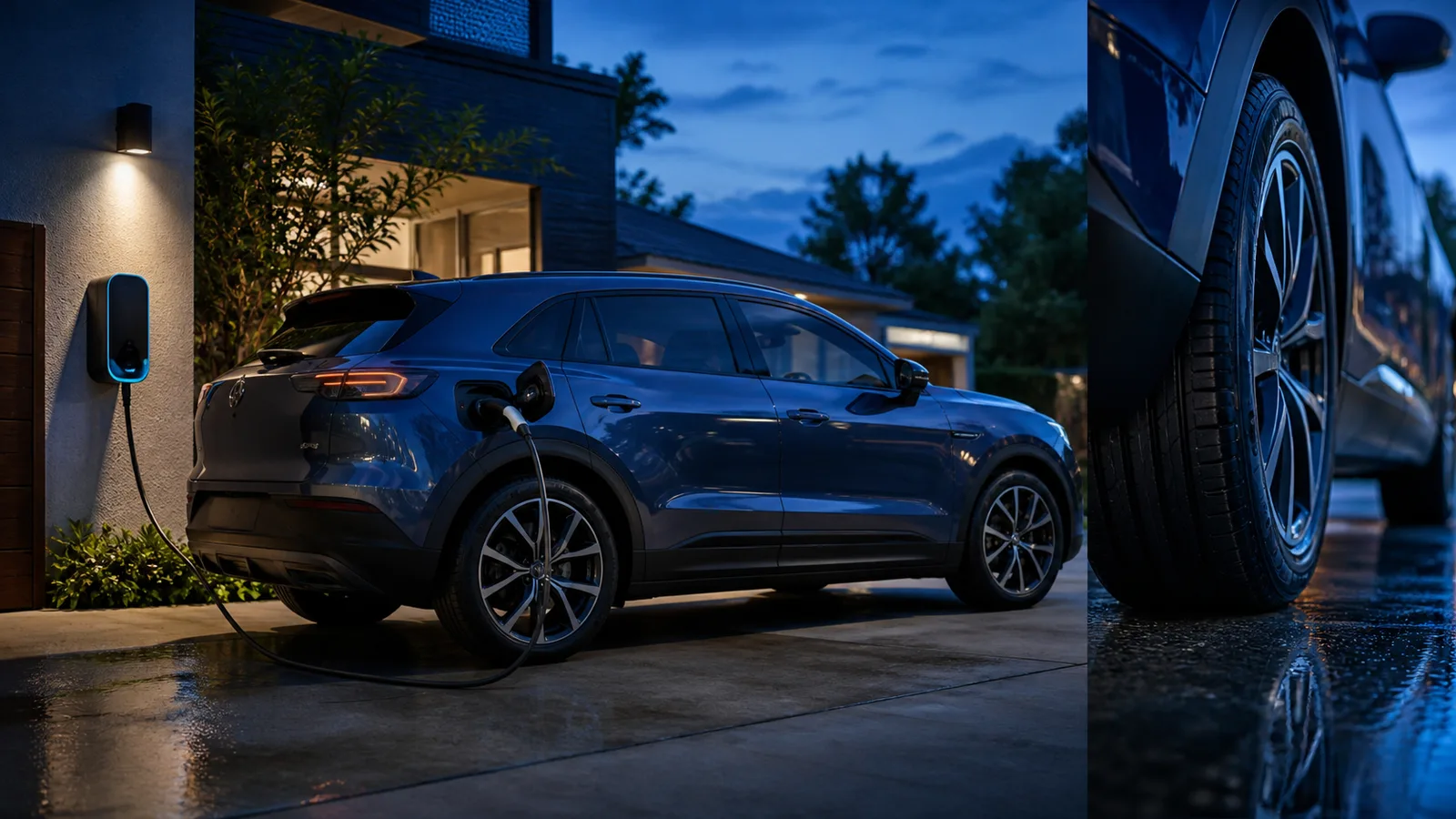
The fastest charger is not automatically the best. Most drivers need enough overnight energy for tomorrow—not a full battery from empty every night.
Estimate daily energy
Multiply daily miles by vehicle energy consumption, then add a margin for charging losses and cold weather. Compare that need with the hours the car is parked.
Match the electrical service
A licensed electrician should evaluate panel capacity, circuit length, local code and load management.
- Use listed equipment for the installation
- Confirm connector and vehicle charge-rate compatibility
- Keep the cable away from trip and impact hazards
Schedule charging wisely
Off-peak rates can reduce cost. In extreme weather, cabin preconditioning while connected can preserve usable battery energy.
Sources and useful tools
U.S. DOE home charging guide ↗Use this guide as a decision aid.
Specifications and procedures vary. Follow the owner’s manual and use a qualified technician whenever safety or diagnosis is uncertain.