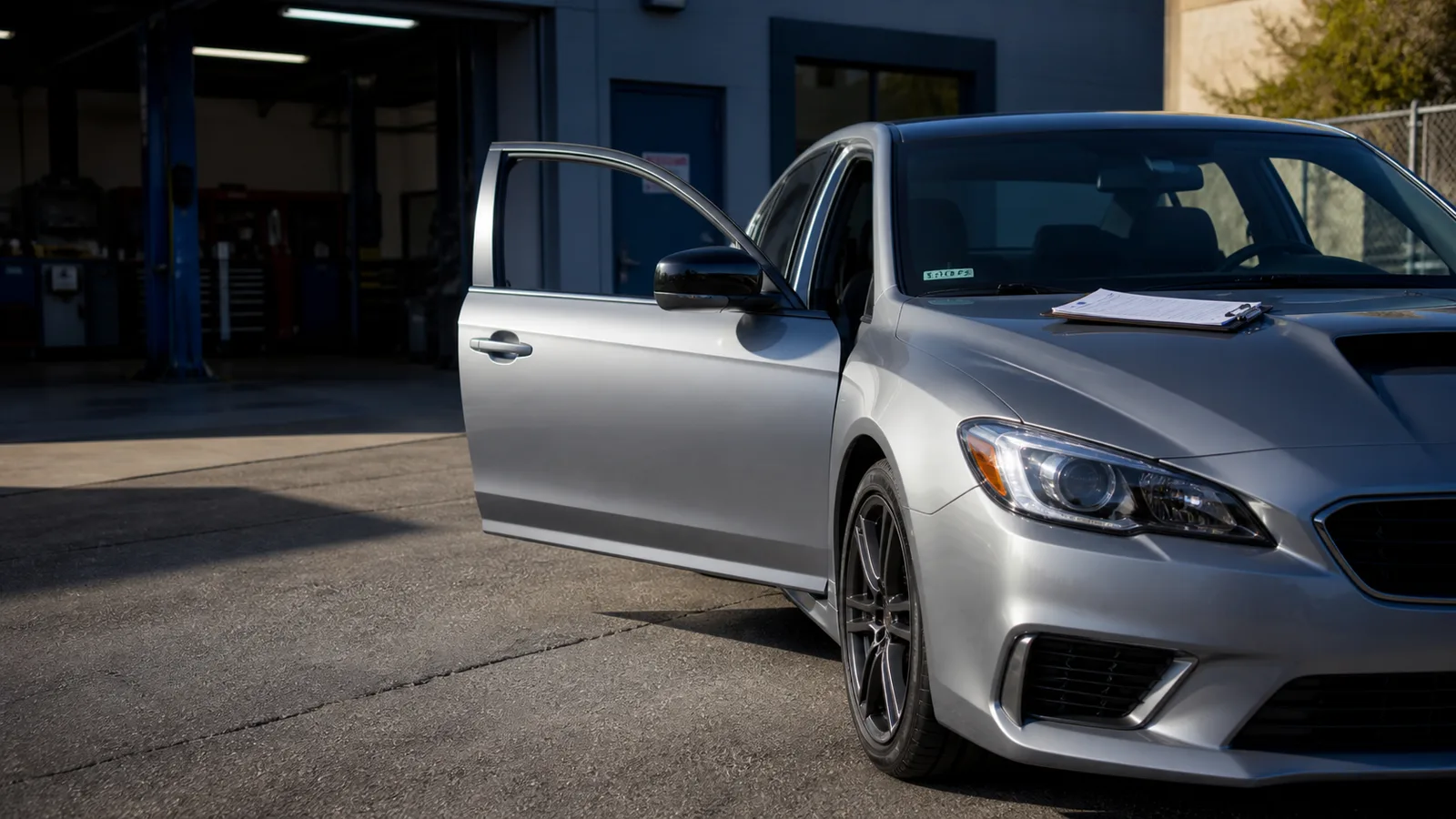
An accident entry is not an automatic rejection, and a clean report is not proof of original bodywork. The decision depends on what was damaged, how it was repaired, what evidence exists and whether the price reflects the remaining uncertainty.
Start with documentation, not adjectives
Ask for pre-repair photos, the estimate, structural measurements, parts invoices and the final repair order. “Minor” and “professionally repaired” are claims until the documents and physical inspection support them.
Look for structural and restraint-system work
Damage near rails, pillars, suspension mounting points or the passenger cell deserves specialist assessment. Confirm how airbags, seat-belt pretensioners, sensors and occupant-classification components were handled.
Inspect repair quality in layers
Compare panel gaps, paint texture, seam sealer, welds, corrosion protection, glass dates, lamp markings and fasteners. Then inspect alignment, tire wear, water leaks, wind noise and electronic calibrations.
- Scan all accessible modules, not only the engine controller
- Ask for ADAS calibration documentation when relevant
- Measure paint and structure with suitable professional equipment
Test the car as a repaired system
A straight steering wheel does not prove correct geometry. Use a pre-purchase inspection, alignment measurements and a controlled road test to evaluate tracking, braking, noise and stability.
Price the uncertainty honestly
Account for resale stigma, insurance limitations, corrosion risk and missing documentation. Walk away when the seller blocks inspection, identifiers disagree, safety warnings remain or the repair cannot be explained coherently.
Sources and useful tools
FTC used-car buying guidance ↗NHTSA VIN recall lookup ↗Specifications and procedures vary. Follow the owner’s manual and use a qualified technician whenever safety or diagnosis is uncertain.